

Siding & Exterior Finishing in Logan, UT
The layer that takes every freeze, every thaw, and every February storm the valley sends at it.
Siding, stone, brick and trim across Logan and Cache Valley, installed by the same self-performing crew that has been building here since 1979. New construction, full re-sides, and repairs where water has already found its way in.
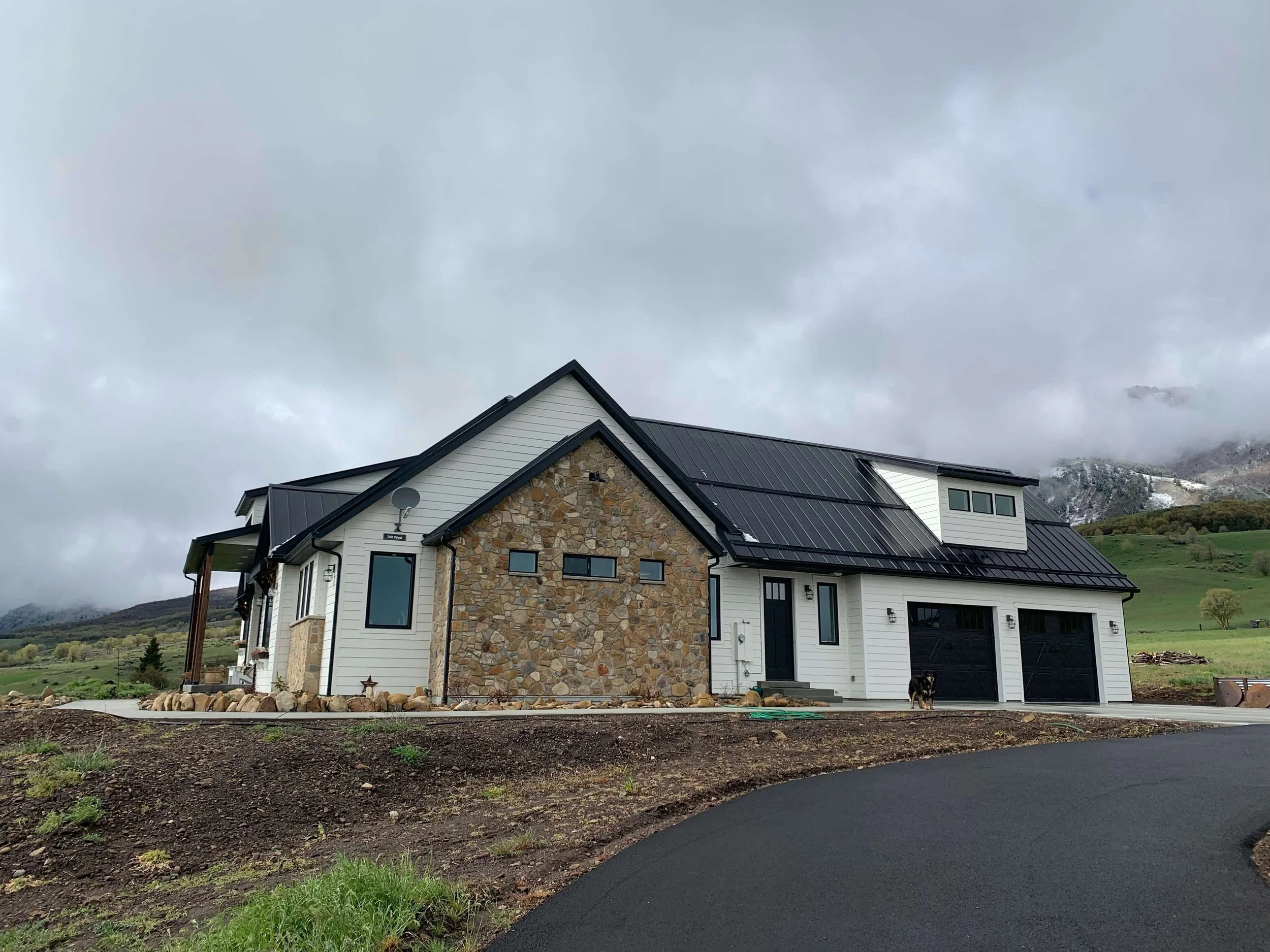
Siding, Stone, Brick & Trim
Most exteriors here are a combination rather than one material. A stone or brick base where snow piles against the wall, siding above it, and trim tying the two together. We install all of it, which means the transitions between them are one crew's responsibility instead of a seam where two trades point at each other.
The main field of most walls we build. Horizontal lap for a traditional look, vertical board-and-batten for the farmhouse profile that has taken over new builds across the valley. Both go on over a drainage detail, not flat against the sheathing.
- New builds and full re-sides
- Prefinished or site-finished
Usually the bottom three or four feet, which is exactly where snow sits against a house for months. Stone handles that contact far better than siding does, and it is why so many Cache Valley homes carry a stone base.
- Wainscot and full-height
- Columns, chimneys, entries
Still the right answer on a lot of in-town Logan homes, especially where the existing house is brick and an addition has to disappear into it. Matching old brick and old mortar is its own skill.
- Full walls and accents
- Addition and repair matching
Corners, window and door casing, frieze boards, soffit and fascia. This is where a siding job is actually judged, and where water gets in when it is done badly. It is also where ice damming does its damage at the eave.
- Window and door casing
- Eave and rake detailing
What's Behind the Siding
Siding is the part you see, and it is not the part that keeps water out. The wall behind it does that, and in a climate that freezes and thaws as often as ours does, the details between the layers are what decide whether a wall lasts forty years or rots quietly for ten.
- SidingThe visible layer. It sheds most of the water and takes all of the UV, which on a south or west elevation here is harder service than people expect.
- Drainage gapA rainscreen gap behind the siding so any water that gets past it can run down and out instead of sitting against the sheathing. In a valley that freezes and thaws as often as ours, trapped water is what splits a wall apart.
- Weather-resistive barrierThe actual water control layer, lapped like shingles and tied into the window and door flashing. This is the part nobody sees and the part that decides everything.
- Sheathing, framing & insulationThe structure, insulated and air-sealed for IECC Climate Zone 6, and fastened for the 90 mph design wind speed Cache County builds to.
- Clearance above gradeSiding kept up off the dirt and off the concrete, because snow sits against the base of a house here for months and anything touching grade wicks water straight up into the wall.
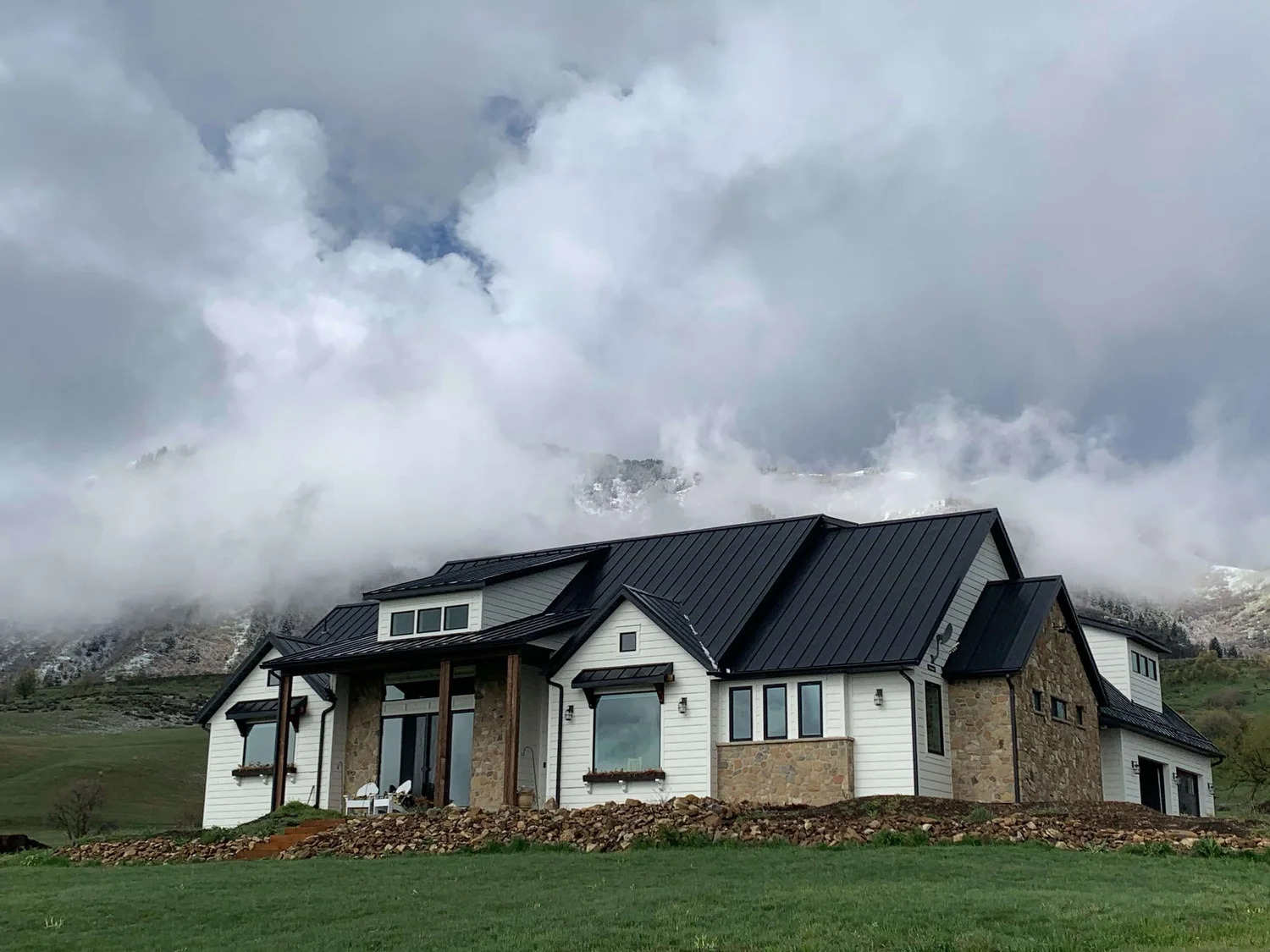
Why Exteriors Fail in Cache Valley
Siding does not usually fail because the product was bad. It fails because of what our winters do to water that got somewhere it should not have been.
Freeze and thaw, over and over.
We do not get one long freeze, we get dozens of cycles. Water that works behind siding, into a mortar joint, or under a poorly flashed window expands every time it freezes. That is what opens a hairline into a crack and a crack into rot.
Snow sitting against the wall for months.
A drift piled against the base of a house is constant moisture contact through the whole winter. It is the reason we keep siding well above grade and put stone or brick where the snow actually lands.
Ice at the eaves.
Ice damming pushes water backward, up under the roof edge and behind the fascia. The siding gets blamed for a leak that started above it, which is why we care about how the eave, soffit and wall come together.
Hard sun on the dry side of the year.
Our summers are dry and bright at 4,500 feet. South and west elevations take years of UV that the north side never sees, and they are usually the first walls that need attention.
Signs It's Time to Re-Side
Some of these are cosmetic and some mean water is already in the wall. If you are seeing more than one or two, it is worth having someone walk it with you before another winter.
Soft or spongy spotsPress on the siding and the wall gives. That is moisture already in the sheathing, and it does not get better on its own.
Paint that will not holdRepainting every few years usually means moisture is pushing out from behind, not that the last paint was bad.
Splitting, cupping or gaps at the seamsClassic freeze-thaw damage, and an open seam is a direct path for the next storm.
Siding that reaches the dirt or the concreteNo clearance at grade means the bottom course is wicking water every time the snow melts.
Stains below windows or at cornersUsually a flashing problem rather than a siding problem, and worth finding before you cover it back up.
Rising heating bills with no other causeFailed siding often comes with wet or settled insulation behind it, and a wall that stopped performing.
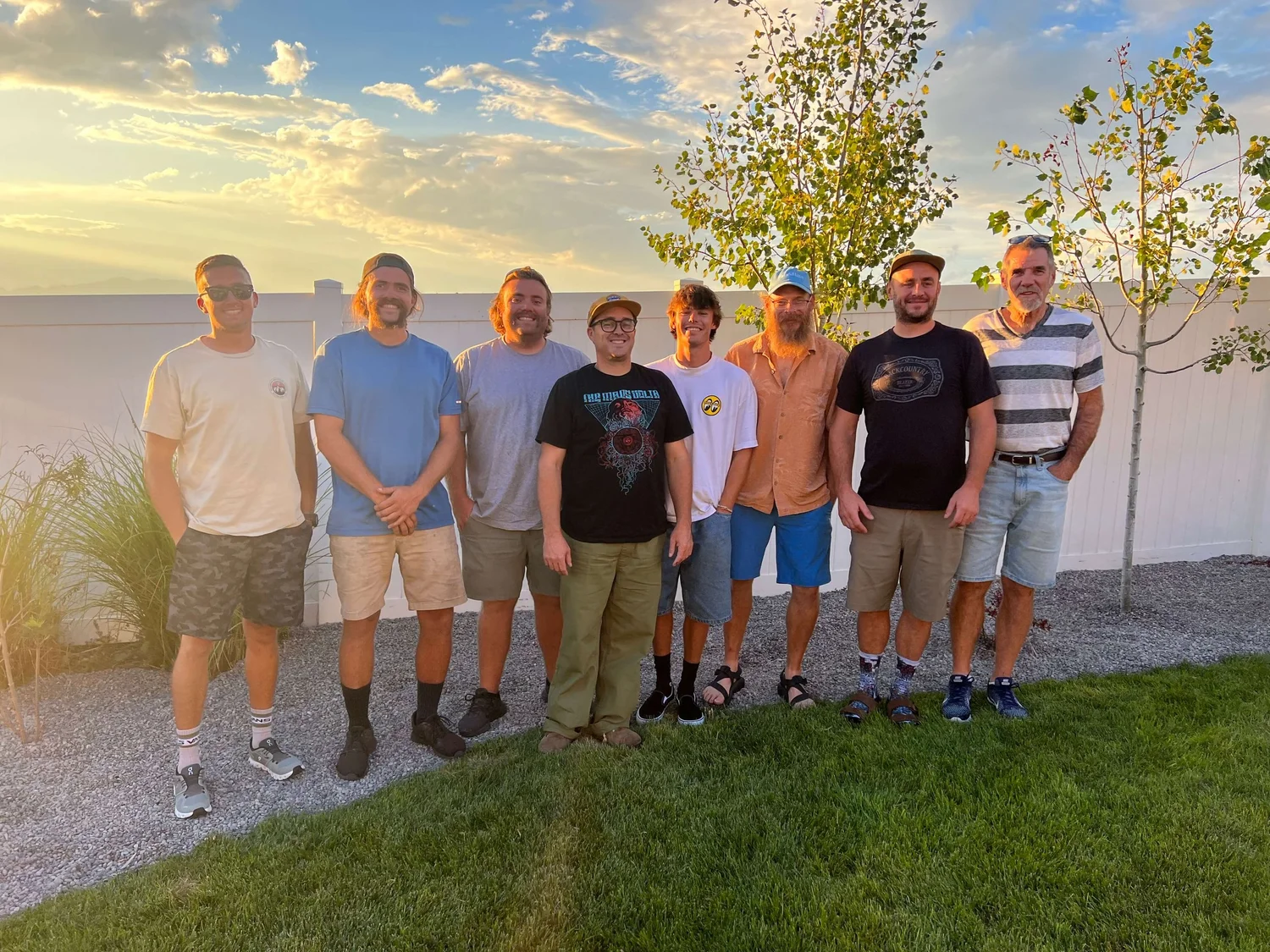
The Same Crew, Start to Finish
Exterior work goes wrong at the handoffs. The siding crew blames the window installer, the mason blames the framer, and the homeowner is the one standing in the middle of it. We self-perform most of our work, so the flashing, the siding, the stone and the trim are all ours, and so is the answer when something needs fixing.
We have been building in this valley since 1979, three generations of the same family. We are a licensed Utah general contractor, and you can verify that anytime through the state's DOPL license lookup. Every project carries a 1-year workmanship and materials warranty. We're better with tools than trends.
Our Cache Valley Service Area
Logan is home base and Cache County is where most of our work happens, from the valley floor to the east bench. We build in the surrounding towns too, and we travel well beyond the valley for the right project.
Cache Valley, Utah
- Logan
- North Logan
- Hyde Park
- Smithfield
- Providence
- Nibley
- Hyrum
- Richmond
- Wellsville
- Lewiston
Just Outside the Valley
- Brigham City
- Tremonton
- Preston, ID
- Franklin, ID
Building Outside Cache Valley? Cache County is home base, but we travel for the right project. We take select work across Utah, north into Idaho, east into Wyoming, and out to Montana and Colorado. Tell us where you're building and we'll give you a straight answer on whether we're the right crew for it.
Ask About Your LocationSiding & Exterior Questions
What siding holds up best in Cache Valley?
Less depends on the product than people expect, and more depends on what's behind it. A mid-range siding installed over a proper drainage gap with flashing done right will outlast a premium product slapped flat against the sheathing. That said, we'll talk through the trade-offs for your elevation, your exposure and your budget rather than pushing one material.
Do you replace the house wrap underneath, or just the siding?
On a full re-side we replace the weather-resistive barrier and redo the flashing at windows, doors and transitions. Leaving the old barrier in place is cheaper on the bid and it's where most re-side jobs go wrong, because the layer that actually controls water is the one you didn't touch.
Do you do stone and brick as well as siding?
Yes. Siding, stone veneer, brick and trim are all in scope, and most Cache Valley exteriors combine them. Having one crew own the transitions between materials is the point, because the seams between trades are where water gets in.
Can you do exterior work in winter?
Some of it, and some of it shouldn't be rushed. Certain materials and mortar have temperature limits, and opening a wall up in February is a different proposition than doing it in September. We'll tell you straight whether your project should wait for spring or whether it's worth doing now, especially if water is already getting in.
How long does a re-side take?
Most houses run one to three weeks depending on size, how many materials are involved, and what we find once the old siding is off. We'll give you a real window at the estimate, and if we open a wall and find rot, you'll hear about it that day rather than at the end.
Do you warranty your work?
Yes. Every Bergeson project carries a 1-year warranty covering both workmanship and materials. Ask us for the specifics on your project and we'll walk you through exactly what it covers.
Explore Our Services
Ready to Fix Your Exterior?
Tell us what you're seeing, or what you're building. We'll walk the house, tell you what's actually going on behind the siding, and give you a straight number.