

Before you sign with any general contractor in Cache Valley, get clear answers to four things: is their Utah license active, who will actually be working on your site, what's in the written contract, and what happens if something goes wrong after you move in. A contractor who answers all four plainly is worth a closer look. One who gets vague on any of them isn't.
We've been building in Logan and across Cache Valley since 1979, and these are the questions we'd want our own family to ask. Some will narrow your list fast. Others are about how the job will actually go once the excavator shows up.
1. Is your Utah license active, and does it match the company on the contract?
Utah licenses contractors through the Division of Occupational and Professional Licensing (DOPL), and you can check any license yourself in a couple of minutes with the state's license lookup. Don't take a license number on a business card at face value. Look it up and check three things:
- The status is active. An expired or suspended license is a hard stop.
- The name matches. The licensed entity should be the same company that's on your bid and your contract.
- The classification fits the job. Utah's general contractor licenses include classes like B100 (General Contractor) and R100 (Residential/Small Commercial). A license that covers your type of project matters more than the label on the truck.
While you're at it, ask for proof of liability insurance and workers' compensation coverage. A good contractor sends these without blinking.
2. Who will actually be on my site?
This is the question most people skip, and it's the one that shapes your experience the most. Some general contractors run every trade through subcontractors and visit the site occasionally. Others keep their own crew on the job every day. Neither model is automatically wrong, but you should know which one you're hiring.
Ask who supervises the site day to day, which trades their own crew handles, which ones they sub out, and how long they've worked with those subs. A contractor with steady, long-term subcontractors runs a very different job than one hiring whoever is open that week.
We're a family-owned general contractor, three generations deep, and we self-perform most of our work. Our own crew handles much of the trim and finish carpentry in-house, so the people framing your walls are often the same people finishing them.
That's also why exterior work like siding, stone and trim goes smoother for us. Fewer handoffs means fewer places for something to fall through the cracks.
3. What's in the written contract?
Everything you've talked about should end up on paper. At a minimum, a construction contract should spell out:
- The scope. What's included, and just as important, what isn't.
- How the price works. Whether it's a fixed price or cost-plus, and what the payment schedule looks like as work is completed.
- Allowances. Placeholder budgets for things you haven't picked yet, like flooring or light fixtures, and what happens if your final picks cost more.
- Change orders. How changes get priced, approved and documented before the work happens.
- Schedule. A realistic window, and how weather delays are handled. In Cache Valley, that last part matters.
A written contract also protects you in a way many homeowners don't know about. Under Utah's Residence Lien Restriction and Lien Recovery Fund Act, a homeowner who has a written contract with a licensed contractor, pays that contractor in full, and occupies the home can be protected from liens filed by unpaid subcontractors or suppliers. DOPL explains the requirements and the current status of the fund in its Residence Lien Recovery Fund FAQ. It's one more reason to never start a project on a handshake.
4. What happens after I move in?
Every house settles, and small things show up in the first year: a door that needs adjusting, a crack in drywall, a sticky window. What matters is who fixes it and how fast. Ask for the warranty in writing, and ask what it covers, how long it lasts, and who to call.
At Bergeson, every project carries a 1-year warranty covering both workmanship and materials. If something we built isn't right, we come back and make it right.
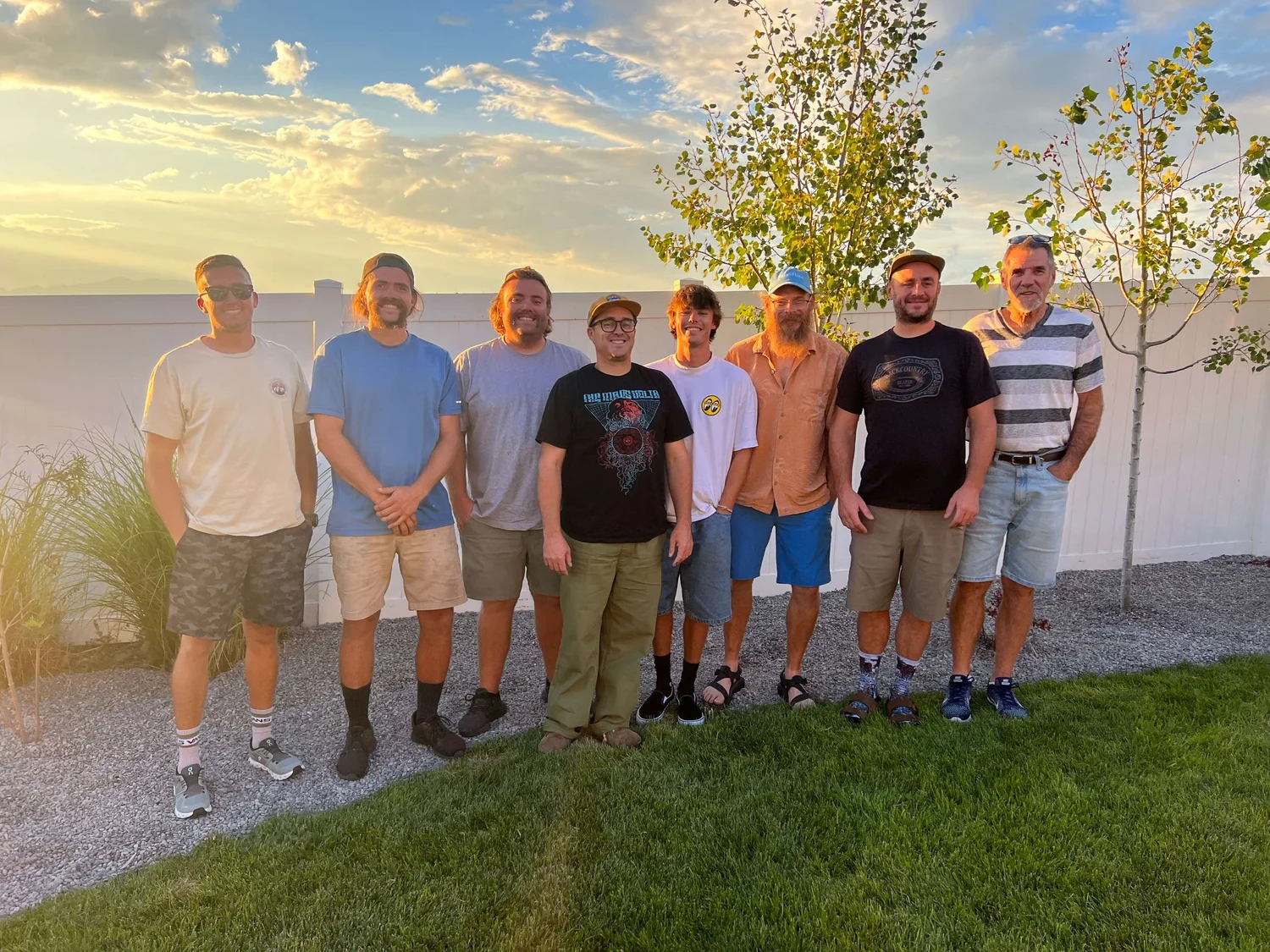
Questions that matter more in Cache Valley
A general contractor can check every box above and still be a poor fit for building here. These are the local questions worth asking:
- How do you handle winter? Our winters are long and unpredictable, and a build that starts too late can run straight into frozen ground. A contractor should be able to tell you when to start and what they do to protect work through the cold months. We wrote about this in how to time your custom home build in Cache Valley.
- Have you built in my town? Permits run through your city, or through Cache County for unincorporated land, and every office has its own process. A contractor who already knows yours saves you time, whether you're building in Logan, North Logan, Hyde Park, Smithfield or Providence.
- Have you built on lots like mine? A sloped lot on the east bench, a few acres in the north end of the valley, and an infill lot in an older Logan neighborhood are three very different jobs.
- Do I need an architect, or can you work from my plans? The answer depends on the project. Here's our honest take on whether you need an architect.
Red flags worth walking away from
- The license doesn't show up in DOPL's lookup, or it's under a different name.
- They want most of the money up front, before meaningful work is done.
- They push you to sign quickly, or won't put the scope and price in writing.
- They can't point you to homes they've built that you can drive past.
- They get vague when you ask who will be on site.
Planning a build or remodel in Cache Valley? Bring your questions. We'll answer every one of them, and tell you straight if we're not the right fit. Learn more about how we work as a general contractor in Logan, UT.
Start a ConversationFrequently Asked Questions
How do I check if a contractor is licensed in Utah?
Use the Utah Division of Occupational and Professional Licensing (DOPL) license lookup. Search by the contractor's name or license number and confirm the license is active, the name matches the company on your contract, and the classification fits your project.
Do I need a written contract with a general contractor?
Yes. A written contract protects both sides by spelling out scope, price, payment schedule, allowances and how changes are handled. In Utah it also matters for lien protection: homeowners who have a written contract with a licensed contractor and pay in full can be protected from liens filed by unpaid subcontractors or suppliers.
What should a contractor's warranty cover?
Get the warranty in writing and make sure it says what's covered, for how long, and who to call. Bergeson Construction's warranty covers both workmanship and materials for one year on every project.